


Typical businesses often miss the fact that over 60 percent of customers actually search for local services and products online every week. Understanding your local market is therefore crucial if you want your business to be visible and grow where you actually operate. By purposefully adapting your marketing to your local environment, you can build stronger customer relationships and stand out from the competition.
Table of contents
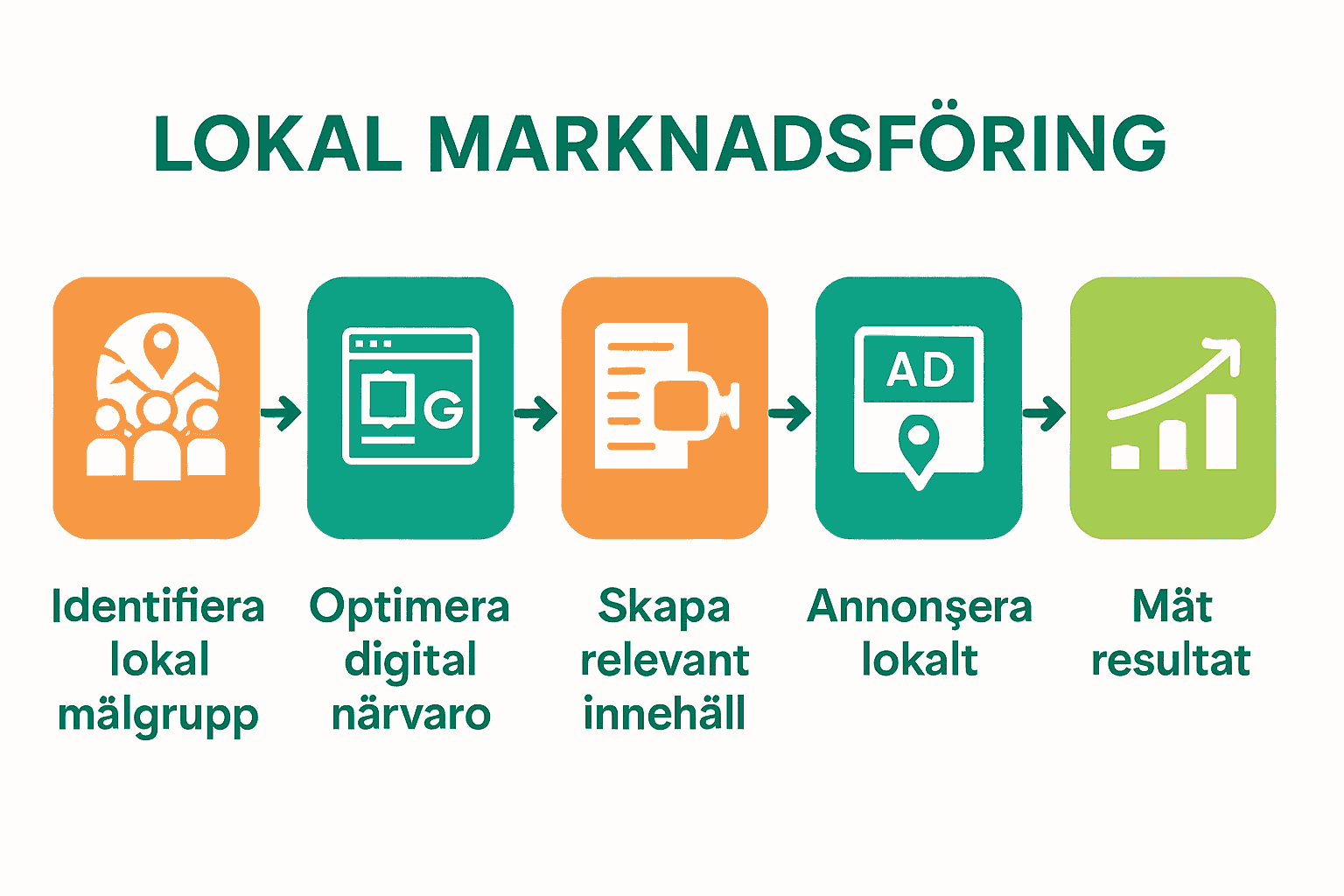
- Step 1: Define your local target audience and market
- Step 2: Optimize your digital presence for local visibility
- Step 3: Create engaging, locally tailored content
- Step 4: Use digital ads for local reach
- Step 5: Evaluate and improve your marketing efforts
Quick summary
| Key point | Explanation |
|---|---|
| 1. Define your local target audience | Understand your customers' demographic and psychological characteristics for effective marketing. |
| 2. Optimize your Google My Business profile | A complete profile increases your visibility and makes it easier for customers to find you. |
| 3. Create locally adapted content | Content that resonates with local interests builds stronger customer relationships. |
| 4. Use digital advertising effectively | Targeted ads on the right platforms maximize your reach and customer engagement. |
| 5. Evaluate and adjust continuously | Analyze results carefully to improve future marketing efforts. |
Step 1: Define your local target audience and market
The first step in successful local marketing is understanding exactly who your customers are in your geographic area and what their needs are. By defining your local target audience, you create a solid foundation for all future marketing efforts.
To identify your specific local market, you need to conduct a thorough demographic and psychographic analysis. Start by mapping out basic characteristics such as age, gender, income level, marital status, and occupation of potential customers in your area. Then, it’s important to dig deeper and understand their lifestyle, interests, values, and purchasing behaviors.
Some practical methods for gathering this information include local surveys, dialogues with existing customers, analysis of municipal statistics, and use of digital tools like Google Analytics to understand demographic trends. Plan digital marketing for increased business growth can give you further insights into how you can conduct this type of market analysis.
Pay attention to specific local characteristics. Each geographic area has unique characteristics that influence consumer behavior. One neighborhood may have a younger population with high incomes, while another has more families with children on a limited budget. These nuances are crucial for tailoring your marketing strategy.
The next step is to create detailed customer personas that represent your typical local customers. By giving them names, backgrounds, and specific characteristics, you make them more alive and can develop more targeted marketing messages.
Step 2: Optimize your digital presence for local visibility
Optimizing your digital presence is crucial to being visible and attracting local customers in the digital world. In this step, we’ll explore how you can strengthen your online visibility and make your business easier to find for potential customers in your area.
Start by ensuring your Google My Business profile is complete and up-to-date. This means adding accurate contact information, opening hours, high-quality photos of your business, and encouraging customers to leave reviews. Why online marketing? can give you further insights into the importance of digital presence.
Review your website and make sure it is optimized for local searches. This includes using local keywords, creating location-specific content, and having clear contact information with your geographic address. Implement structured data markup that helps search engines understand the local context of your business.
Social media channels are also critical for local visibility. Create and maintain active profiles on platforms that are relevant to your industry and local market. Share local content, showcase your services, and engage in local discussions and groups.
Don't forget the importance of local digital marketing channels like Google Ads and local advertising platforms.
 These tools can help you target specific demographics in your local area and increase your visibility among potential customers.
Step 3: Create engaging, locally tailored content
Locally tailored content is key to building a genuine and memorable connection with your local customers. By creating content that truly resonates with your specific geographic market, you can differentiate your business and build stronger customer relationships.
Start by identifying local interests and stories that are relevant to your specific market. This could include local events, seasonal activities, or specific social issues that engage your audience. How to make your audience love your content can give you additional strategies for creating memorable content.
Be authentic and personal in your content. Highlight local perspectives by including stories from local customers, showcasing local employees, or showcasing how your company contributes to the local community. Use language and references that are specific to your region and that instantly resonate with your audience.
Leverage different content formats for maximum reach. Create videos showcasing local places, publish photo collages from local events, or produce podcasts discussing regional topics. Be creative and experiment with formats that suit your specific industry and local market.
Don’t forget the importance of interactive content. Encourage local customers to share their own stories, create polls on local issues, or start challenges that engage the local community. By making your content a two-way communication, you increase the chances of genuine and long-lasting customer interaction.
Step 4: Use digital ads for local reach
Digital advertising is a powerful tool for increasing your local visibility and attracting potential customers right when they are searching for your services. In this step, we will explore how you can use digital advertising platforms to maximize your local reach and create meaningful encounters with your target audience.
Start by choosing the right advertising platforms that suit your local market. The role of digital advertising can give you deeper insights into how different channels are performing. Google Ads is particularly effective for local businesses because you can target specific geographic areas and keywords that are relevant to your business.
When creating your local ads, it’s crucial to use precision in your targeting. Define exactly which demographic groups you want to reach by specifying parameters such as age, income, interests, and precise geographic area. This ensures that your ads are shown to the most relevant potential customers.
Pay attention to the language and design of your ads. Local ads should feel personal and authentic. Include local linguistic nuances, reference specific places or events in the area, and use images that represent your local context. This creates instant recognition and credibility with your audience.
Continuously track and analyze your advertising campaigns. Leverage analytics tools to understand which ads are performing best, which demographic groups are responding the most, and how you can optimize your future campaigns. Be prepared to adjust your strategy based on these insights to maximize the return on your digital advertising.
Step 5: Evaluate and improve your marketing efforts
Continuously evaluating and improving your marketing efforts is crucial to long-term success. In this final step, we'll explore how you can systematically analyze your results and adjust your strategy to achieve better results.
Start by defining clear key metrics that will help you measure marketing success. ROI Statistics For Digital Marketing can give you insight into which metrics are most relevant to your industry. Focus on parameters like conversion rate, customer acquisition cost, website visitors, and sales growth.
Conduct regular analytics reviews where you systematically review your results. Use tools like Google Analytics to gain detailed insights into customer behavior. Identify which channels generate the highest returns and which campaigns have the greatest impact.
Don’t be afraid to experiment and make adjustments based on your analysis. If certain marketing channels aren’t delivering the desired results, be prepared to reprioritize or simply try new approaches. Agile marketing is about continuously learning and adapting.
Create a culture of measurement and improvement in your organization. Document your results, share insights with your team, and view every campaign as an opportunity to learn and grow. By taking a data-driven and experimental approach, you can continually increase the effectiveness of your marketing efforts.
Take your local marketing to the next level with expert help
Navigating the complex world of local marketing can feel overwhelming when it comes to defining the right audience, optimizing your digital presence, and creating engaging content. Many businesses struggle to capture local traffic and convert it into loyal customers because it requires both technical expertise and a clear strategy to succeed.
With iMarketing’s solid expertise in website development and digital marketing, your business gets the complete solution to grow locally. Whether you need a customized website that is search engine optimized, a strong social media presence or effective Google Ads campaigns to reach your local target audience, we can help you take control and feel confident in your marketing efforts. Read more about how we can help you plan digital marketing for businesses and why online marketing is crucial for your business.
Let's work together to create clear results and long-term growth for your business. Visit iMarketing.se today and take the first step towards a stronger local market position that brings more visibility and more customers.
Frequently asked questions
How do I define my local target audience for marketing?
To define your local target audience, start by mapping demographic characteristics such as age, gender, and income level. Also conduct a psychographic analysis to understand lifestyle and purchasing behaviors. Use local surveys or dialogues with existing customers to collect this information.
What tools can I use to optimize my digital presence?
Optimize your digital presence by ensuring your Google My Business profile is complete and up-to-date. Make sure your website is optimized for local searches by including local keywords and providing clear contact information. Review and update this monthly to maintain good visibility.
What is localized content and how do I create it?
Locally relevant content is content that relates to specific interests and events in your area. To create this, identify local stories and engage your audience with authentic experiences or examples. Set a month-long plan to produce and publish different formats of this content.
How can I use digital advertising to reach out locally?
Use platforms like Google Ads to target local ads to specific demographics. Define your target audience’s age, interests, and geographic location carefully to maximize reach. Set up campaigns that target a minimum of three different demographic segments within 30 days.
How do I evaluate the effectiveness of my marketing efforts?
Define key metrics like conversion rate and customer acquisition cost to measure your success. Conduct monthly analysis to identify which channels are generating the highest return and adjust strategy accordingly. Document the results to continuously improve your efforts.
What should I include in my customer personas?
Include details like name, age, marital status, occupation, and interests when creating your customer personas. By giving them vivid characteristics, you can better tailor your marketing messages. Work on networking with real customers to gain insights into their needs and behaviors.


 EN
EN  SE
SE