


Almost 90 percent of all purchasing decisions now begin with an online search. For businesses, this means that visibility in search engine results can make or break a customer. SEO is more than technical tweaks and keywords, it’s about strategically building a credible presence that attracts the right audience. Here’s how smart search engine optimization can drive long-term growth and strengthen your company’s digital position.
Table of contents
- What does SEO mean in marketing?
- Differences between SEO and other digital marketing
- How SEO strategies affect business growth
- Measuring results and ROI for SEO efforts
- Common mistakes to avoid with SEO
Key points
| Point | Details |
|---|---|
| SEO increases website visibility | Search engine optimization (SEO) improves a website's ranking in organic search results and increases digital visibility without paid advertising. |
| Long-term results | Unlike paid advertising, SEO provides sustainable results that continue to generate traffic over time. |
| Focus on quality content | To succeed with SEO, it is important to create relevant and high-quality content that meets users' needs. |
| Measurement and analysis are crucial | Regular analysis of SEO results helps businesses understand their digital strategy and maximize return on investment. |
What does SEO mean in marketing?
Search engine optimization (SEO) is about making a company's website visible and attractive to search engines like Google. It is a strategic marketing method that aims to improve a website's ranking in organic search results and thereby increase digital visibility. With the right search engine optimization Businesses can attract more qualified traffic to their website without having to pay for every click.
In practice, SEO involves several important components. It involves optimizing the technical structure of the website, creating high-quality and relevant content, building credible external links, and understanding users' search behaviors. The goal is not just to rank high in search results, but to actually deliver value to potential customers through relevant and engaging content that responds to their specific needs and searches.
For small and medium-sized businesses, SEO is particularly powerful because it offers a cost-effective marketing strategy. Unlike paid advertising, organic search results deliver long-term results and build trust with potential customers. A well-optimized website signals professionalism and credibility, which can be crucial in attracting and retaining customer interest in a competitive digital environment.
Differences between SEO and other digital marketing
SEO differs significantly from other digital marketing strategies in that it focuses on organic search results. Unlike paid advertising, which requires continuous investment, it creates digital marketing through SEO long-term and sustainable results that continue to generate traffic even after the initial work.
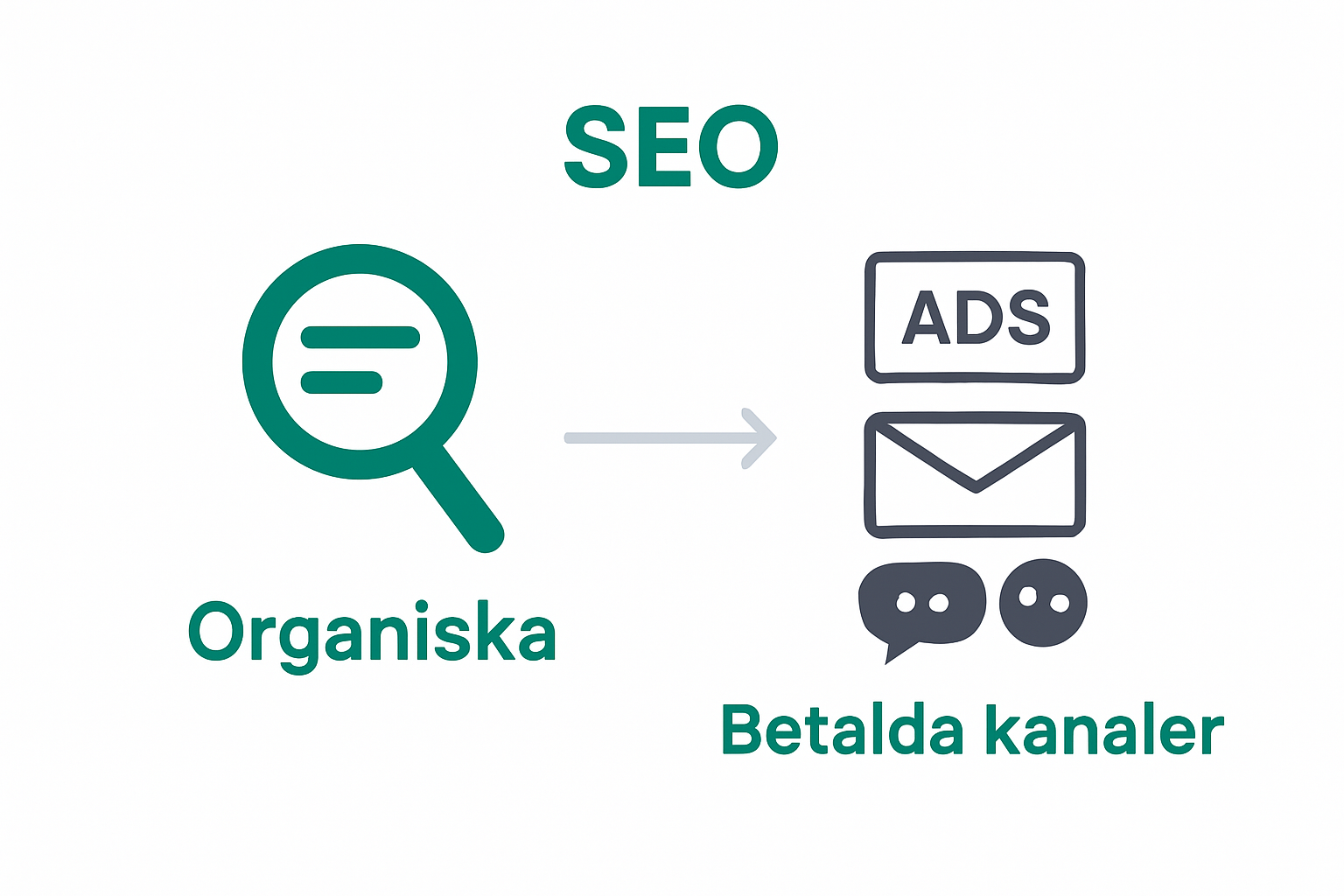
While channels like Google Ads and social media advertising deliver immediate results for a direct cost, SEO builds a more organic and credible presence. SEO is about optimizing a website’s content, technical structure, and external authority to naturally attract visitors. This means that businesses can generate a continuous flow of qualified traffic without paying for every single click.
Other digital marketing methods such as email marketing, social media, and display advertising have specific strengths, but SEO stands out for its ability to create long-term visibility. By consistently delivering relevant, high-quality content that responds to users’ search intent, businesses can build trust, authority, and a stable digital presence that goes beyond short-term advertising campaigns.
How SEO strategies affect business growth
SEO strategies are crucial to the digital growth of modern businesses by creating a solid foundation for visibility and customer acquisition. Search engine optimization for businesses enables a systematic approach where companies can attract potential customers by ranking high in organic search results and thereby increase their market presence without extensive advertising costs.

Through strategic SEO, companies can build long-term credibility and authority within their industry. This involves optimizing the website’s content, technical structure, and external linking to create a natural flow of qualified traffic. Small and medium-sized businesses can particularly benefit from this approach, as it provides the opportunity to compete with larger players through intelligent content strategy and targeted optimization.
The most successful SEO strategies focus not just on search engine rankings, but on creating genuine value for users. By consistently delivering relevant answers to customer questions and needs, businesses can build trust, increase conversion rates, and create a solid foundation for long-term growth. This involves continuous analysis, content development, and adaptation to changing search patterns and user behaviors.
Measuring results and ROI for SEO efforts
Measuring SEO results is about systematically analyzing and quantifying the effects of digital marketing efforts. Digital Marketing ROI Statistics shows that companies that consistently measure and optimize their SEO strategies can significantly increase their organic traffic and conversion rates.
Key metrics for evaluating SEO success include organic traffic growth, search ranking for priority keywords, conversion rate, average time on site, and number of new leads. These metrics give businesses insight into how well their digital content strategy is working and what specific areas need improvement. By using tools like Google Analytics and Search Console, businesses can track these parameters and make data-driven decisions.
Successful SEO ROI measurement requires a long-term perspective that looks beyond short-term results. It’s about understanding how organic visibility generates value over time, not just through direct conversions but also through building brand trust and customer engagement. Regular analysis and continuous optimization are key to maximizing the return on SEO investments.
Common mistakes to avoid with SEO
One of the most critical mistakes in SEO is focusing solely on quantity instead of content quality. Search engine optimization for businesses requires a balanced strategy where the content is relevant, unique and truly valuable to users, not just stuffed with keywords to manipulate the search engines.
Common pitfalls also include technical SEO mistakes like slow websites, poor mobile responsiveness, and complex website structures. Businesses need to ensure fast loading times, easy navigation paths, and a seamless experience across devices. Additionally, a lack of local SEO focus is a common mistake, especially for smaller businesses looking to be visible in their geographic markets.
Another critical mistake is treating SEO as a one-time effort instead of an ongoing process. Search engine algorithms are constantly changing, and successful SEO requires regular content updates, analysis of results, and adaptation to new trends and user behaviors. By avoiding these common mistakes, businesses can build a more robust and effective digital presence.
Maximize Your Digital Growth with the Right SEO Strategy
Navigating the complex world of SEO is a challenge for many businesses. The article clearly shows that the key to success lies in a balanced and continuous SEO strategy that focuses not only on rankings but also on creating real value for users. Many struggle with technical issues, poor content quality, and seeing SEO as a one-time effort. These obstacles risk slowing down your digital development and competitiveness.
In iMarketing.se We understand how important it is to combine technical expertise with smart digital marketing to build a strong and sustainable online presence. Our team will help you avoid common mistakes and implement a strategy that strengthens your brand, increases organic traffic and improves conversions. Discover how our comprehensive solutions in search engine optimization and other digital strategies can give your business a real boost.
Want to take control of your digital future and see real results? Visit iMarketing.se today and let's create an SEO strategy that really makes a difference. Contact us now for a free consultation and start growing online for real.
Frequently Asked Questions
What is SEO and how does it work?
Search engine optimization (SEO) aims to increase a website's visibility in organic search results. By optimizing technical structure, content, and external links, businesses can attract more qualified traffic.
What are the most important components of an SEO strategy?
The most important components include technical optimization of the website, creation of high-quality and relevant content, link building, and analysis of user search behavior.
How can SEO affect my business's growth?
Effective SEO helps businesses build long-term credibility and authority, which can lead to increased web visibility and more conversions without extensive advertising costs.
What common mistakes should I avoid with SEO?
Common mistakes include focusing on quantity instead of quality in content, having a poor website structure, and considering SEO as a one-time effort instead of an ongoing process.
Recommendation
- The Role of Blogs in Marketing: Complete Guide – iMarketing
- Why Search Engine Optimization? Complete Guide For Businesses – iMarketing
- Search Engine Optimization: Complete Guide For Businesses 2025 – iMarketing
- top advertising tools for google ads – Expert comparison 2025 – iMarketing
- Rôle De La Video En Marketing: Guide Complet



 EN
EN  SE
SE